Why the Two Largest Cities in South Dakota Are Worlds Apart
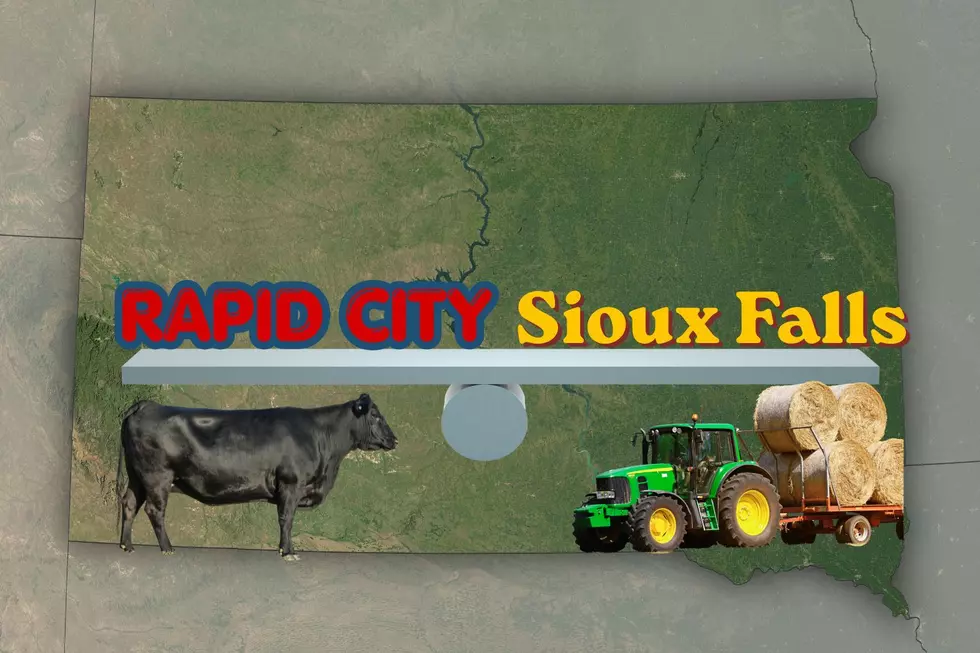
It is the ultimate South Dakota debate that will never truly be settled. East River and West River residents share a state line, a capitol building in Pierre, and a sense of local pride, but that’s about where the similarities end. Sioux Falls and Rapid City sit on opposite ends of the map, holding the entire state in a never-ending tug-of-war. One has the larger population and corporate boom; the other has the iconic Black Hills, Badlands, and Mountain West grit. But behind the polite nods, how deep does the rivalry between South Dakota's two largest cities actually go? Let's take a look inside the great divide.

Being Pulled in Two Different Directions
To say that Sioux Falls and Rapid City are part of the same state is technically true on a map, but for anyone who's lived in South Dakota (East or West River), it feels like living in two completely different countries. They're separated by hundreds of miles of prairie, America's longest river dividing the state in the middle, and two totally different ways of life.
Crossing the Missouri River means something in South Dakota. On the western side, residents area all about cattle ranching, rugged individualism, and the Black Hills tourism economy. On the eastern side, the focus shifts to corn and soybean farming (Eastern SD gets much more rain), major healthcare and banking operations, and the state's two leading universities, USD & SDSU.
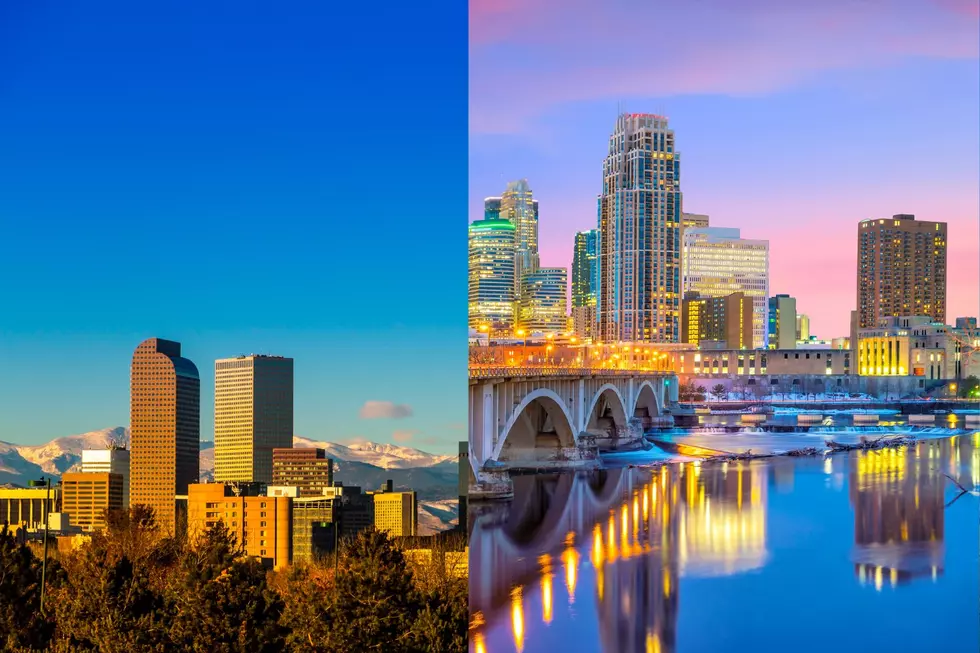
To further the divide, eastern South Dakota has much more in common with cities like Fargo (to its north in North Dakota), and Minneapolis/St. Paul (to its east in Minnesota). In fact, most locals in Sioux Falls, Yankton, Brookings, Vermillion, and Mitchell all pull for the Minnesota teams in professionals sports.
Residents in western South Dakota, on the other hand, have far more in common with cities like Cheyenne, Wyoming, and Denver, Colorado than they they do the Twin Cities of Minnesota. Out in Rapid City, you're much more likely to see someone wearing a Denver Broncos Jersey than a Minnesota Vikings one.
The west is dry, rugged, and, at times, even mountainous. It's landscapes are stunning and huge. You're truly in "Big Sky Country" in Rapid. While out east, life feels much more in line with the rest of the Midwestern States.
There are some who even go as far as saying that, years ago, when the states of North Dakota and South Dakota were created, a big mistake was made.
Awhile back, longtime South Dakota lawmaker, Frank Kloucek famously brought this exact debate to the house floor. He argued that the territory was sliced completely the wrong way back in 1889. In his eyes, we never should have been divided into a 'North' and 'South' Dakota. Instead, the map should have been carved right down the natural boundary of the Missouri River into East Dakota and West Dakota.
Would that have made more sense? It's hard to say. But what we can say, is that both states have done pretty well up until this point. Sure, Rapid City and Sioux Falls have their differences, but that's what makes the Mount Rushmore State so special, isn't it? There's really nowhere else in the US quite like it.
What Was It like to Vacation in South Dakota’s Black Hills 60 Years Ago?
Gallery Credit: Jeff Harkness/B1027.com
More From KXRB