
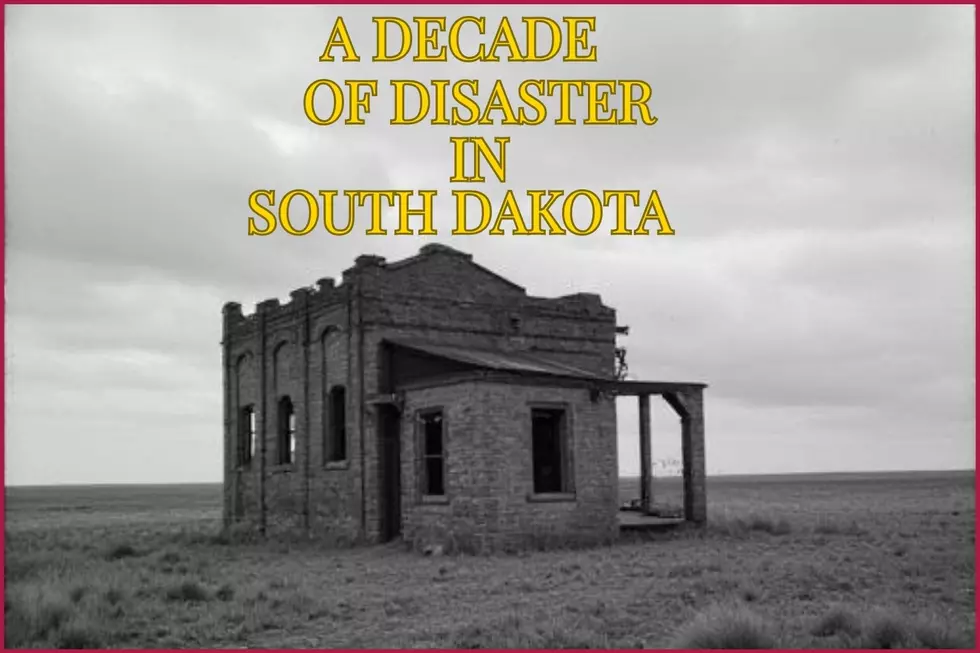
Why South Dakota’s Great Depression Began in 1920, Not 1929
When most people think of the "Great Depression", they picture the panic on Wall Street in October 1929. They picture frantic brokers on Manhattan sidewalks, stock tickers running out of tape, and a sudden, violent crash that plunged America into darkness, almost overnight.
But if you dig into the archives of the Mount Rushmore State, you'll find a much different story. You'll discover how the worst financial collapse in American history began in South Dakota nearly a full decade before the rest of the nation. And the reasons why all boil down to agriculture and bad planning.

Between 1920 and 1929, years before the banking panic of the 1930s, over 400 banks in South Dakota failed.

"According to state historians and the South Dakota State Historical Society, the Great Plains actually suffered through a 'Long Depression' lasting from 1920 to 1941—with over 70% of the state's banks failing before federal relief ever arrived in the 1930s." -History.SD.GOV

The root of South Dakota's 1920 crash actually began during World War I. With European fields destroyed by war, global demand for food skyrocketed. The U.S. government made a point to urge its Midwestern farmers to expand production under the slogan "Food Will Win the War."
To guarantee production, the federal government set high price floors, like $2.00 a bushel for wheat. And South Dakota farmers responded in kind. They took out heavy loans to buy newly invented gasoline tractors and bought up farmland at inflated prices. Millions of acres of native prairie grass (land that held the fragile topsoil together), were plowed up for this absolutely mammoth undertaking.
When the war ended in 1918, European agriculture slowly began to recover, and global demand plummeted. In late 1920, the U.S. government suddenly dropped its wartime price guarantees, pulling the rug out from under local growers, including those farmers right here in South Dakota.
Almost overnight, crop prices tanked:
Wheat dropped from roughly $2.50 a bushel down to under $1.00.
Corn and livestock prices saw similar disastrous drops.
South Dakota farmers were suddenly stuck with gigantic mortgages on land and machinery they could no longer afford. To make matters worse, many tried to plant even more crops to pay off their debts, creating a huge supply surplus that drove prices down even further.
And this is where the banks we talked about earlier come in. During the wartime boom, small-town South Dakota banks had extended easy credit to farmers. When crop prices collapsed, farmers couldn't pay back their loans, leaving banks holding mortgages on land that was losing value quickly.
Between 1920 and 1929, over 400 banks in South Dakota failed, wiping out life savings for many families within the state, ruining entire rural communities, and triggering farm foreclosures across the state long before Wall Street crashed in 1929.
The damage wasn't just financial; it was also environmental. By stripping away the deep-rooted prairie sod during the 1920s, millions of acres of South Dakota topsoil were left completely exposed. When the severe droughts came in and hit the Great Plains hard in the 1930s, there was nothing left to anchor the earth, directly leading to the catastrophic dust storms that defined the Dust Bowl era.
So, in what would come to be known as the 'Mount Rushmore State', the Great Depression affectively began in 1920 and lasted through the entire 1930s.
If you want to read more about how South Dakotans fought the 'Dust Bowl' with trees, check out this article on the South Dakota Shelterbelts here.
Story Sources: A New Deal For South Dakota: Drought, Depression, and Relief, 1920-1941 (R. Alton Lee), Great Plains Quarterly/Center For Great Plains Studies (The Long Depression: Agricultural Crisis of the 1920s), History.SD.GOV
5 Words That'll Help You Sound Like a South Dakotan
Gallery Credit: Andy Gott
More From KXRB